It is not only a question of size
On a road between Turin, Asti and the Langhe, it is easy to point at a brick building and call it a country house. In Italian, though, the name changes what we see. Cascina, casetta and tenuta are not three versions of the same house: each word highlights a different relationship with the land.
The first speaks of production and work; the second of scale and dwelling; the third of extent and ownership. Today, many tenute host guests and many cascine have become agriturismi. That is why the terms can sometimes overlap — but their origins are different.
In one sentence
- Cascina
- A working rural hub: home, stables, barns and courtyard arranged for production.
- Casetta
- A small house. The word primarily describes scale and warmth, not a fixed rural function.
- Tenuta
- A broad rural estate that may include vineyards, woods, fields, buildings and, today, accommodation.

Cascina: the countryside organised around a courtyard
In northern Italian tradition, a cascina is a rural complex, not simply a residence. Treccani's definition brings together dwellings, stables, haylofts, storage and spaces for cheese and butter production around a large courtyard. It is architecture made so that people, animals, harvests, tools and seasons work together.
When you read “cascina” in Piedmont, look for signs of activity: an inner courtyard, long annexes, wide doors, hay, a cellar, sheds or fields connected to the building. Its beauty does not arise from the idea of retreat, but from its ability to support a working life.
Cascina Moglia: when work is also formation
As a teenager, John Bosco worked for about two years at Cascina Moglia, near Moncucco Torinese. There, young Giovanni worked around the stable and experienced the rhythm of a farming family. The cascina enters his biography as a place of work, learning and welcome — not as a decorative setting.
It can be included in the Cammino di Don Bosco, which connects the hills of Don Bosco's youth to the Colle.
Casetta: small, close and human
Casetta is the diminutive of casa: first of all, it means a “small house”, often with a sense of simplicity or affection. It is not a technical category that necessarily includes animals. In rural areas, however, a casetta often stood close to the stable, hay, yard and animals; the separation expected in a contemporary home did not always exist.
This closeness is precisely what makes it expressive. A casetta points to the scale of family and daily life: compact rooms, kitchen, courtyard, vegetable garden and, often, service buildings only a few steps away.
Don Bosco's childhood Casetta
At Colle Don Bosco, the Casetta of his childhood preserves this perspective. It is not an animal house; it is the small rural home where the Bosco family lived, within the farming world of Becchi. The landscape and museum of rural civilisation around it help explain John's childhood before Valdocco.
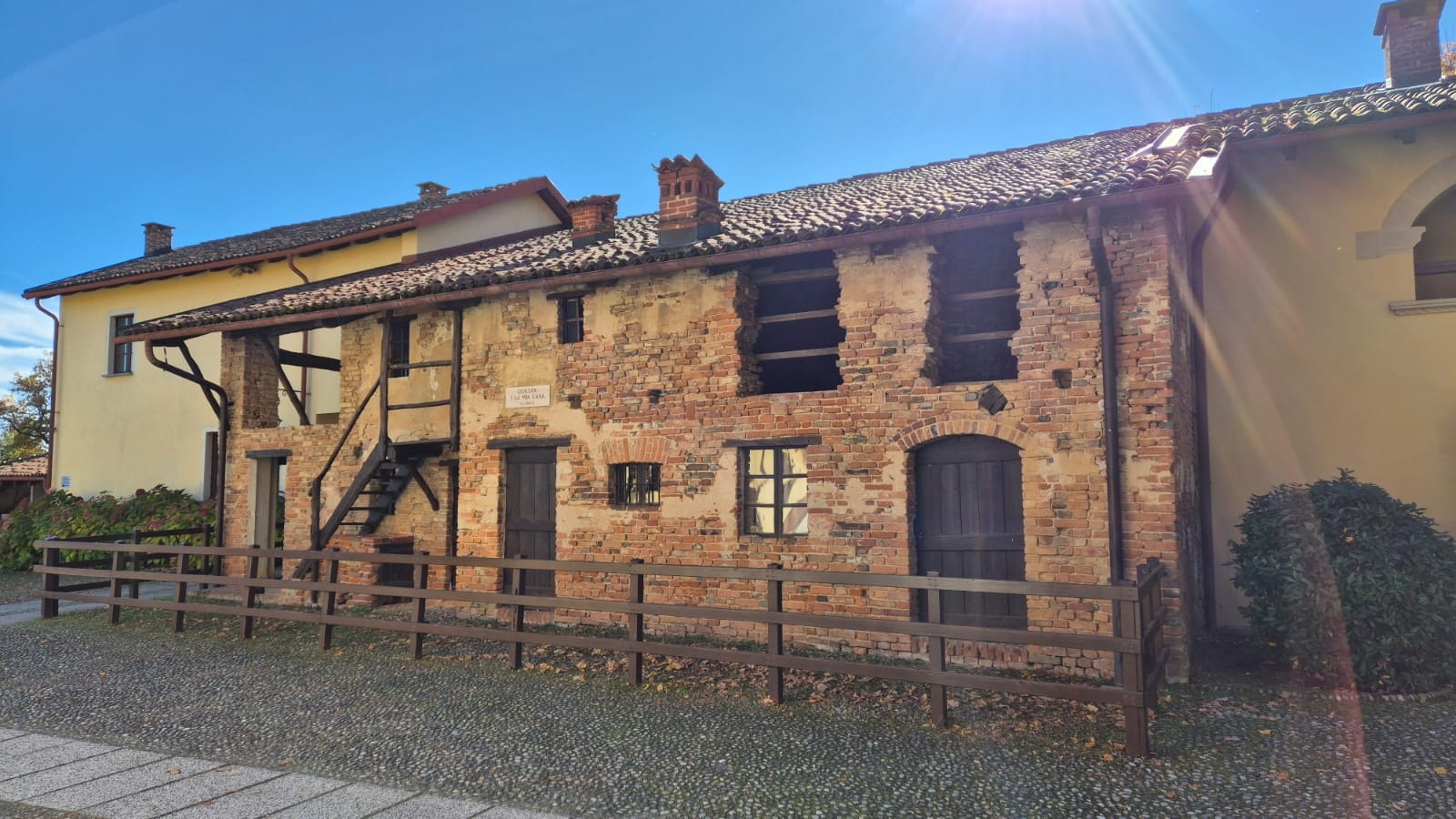
For visitors, the difference is revealing: Cascina Moglia emphasises the work Giovanni did; the Casetta at Becchi brings focus to the family life that shaped him.
Tenuta: when the view opens to the whole property
A tenuta is not defined by the design of one house. The word indicates an extensive rural estate that can include more than one plot, fields, woods, vineyards and different buildings. A cascina may be a working part within a tenuta; the tenuta is the territory managed as a whole.
This is where the contemporary association with weekends, wine, scenery and rest comes from. Many Piedmontese estates now offer accommodation, wine, food or enotourism experiences. That is real and enjoyable for travellers, but it does not replace the word's origin: before being a retreat, a tenuta is land and production.
Staying within a tenuta
In Ivrea, La Bessolina, a Porta Piemonte partner, is a B&B located within a tenuta. It is a useful way to see how a rural estate can welcome today's traveller while remaining connected to the surrounding landscape.
How to tell them apart on a roadside sign
Courtyard, annexes and work?
You are probably looking at a cascina.
A small home is the focus?
The likely word is casetta.
Land and production at estate scale?
You are reading a tenuta.
In practice, the borders are not rigid. One property may be called Tenuta X, contain Cascina Y and have a restored casetta for guests. The key is to notice what each name chooses to tell.
From Colle Don Bosco to the hills of Moncucco
Give this curiosity a real setting on a short route. Start at Colle Don Bosco, observe the Casetta and signs of rural civilisation, then continue through the hills of Moncucco toward Cascina Moglia. Instead of seeking only “Don Bosco sites”, you begin to read how ways of living and working shaped Piedmont.
In the Langhe, Monferrato and Roero, the same key expands: look for productive cascine, understand the bounds of wine estates and choose stays that explain their relationship with the land.
Sources and further reading
Why these three words matter on a trip
Travel in Piedmont becomes more interesting when vocabulary stops being decoration. A cascina sign can lead to a story of work; a casetta can reveal a rural family's intimacy; a tenuta can show how a vineyard landscape still depends on a whole estate.
At places connected with Don Bosco, this reading restores scale to major narratives. Before Valdocco, there was a small house in Becchi. Before fame, there was work at Cascina Moglia. The territory is not background: it enters the biography.
Would you like to turn this curiosity into a route?
Porta Piemonte creates routes in Portuguese that connect Colle Don Bosco, Chieri, Moncucco and rural landscapes with history, food and each traveller's pace.
Talk on WhatsApp